
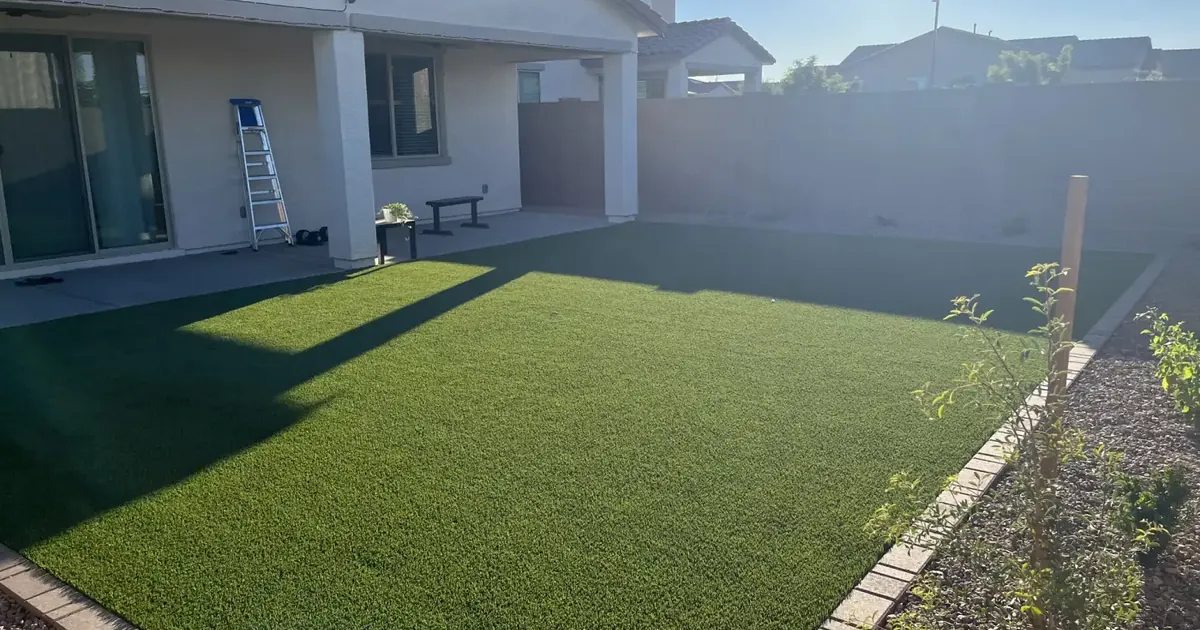
Monsoon season in Arizona can turn a calm afternoon into a powerful storm in a matter of minutes. Heavy rain, strong winds, and blowing dust can quickly overwhelm yards that aren't prepared to handle sudden bursts of water. For homeowners with artificial turf, one of the most common questions is what happens to all that rain.
Many people assume synthetic grass sits on top of the ground like a rug, trapping water underneath. Quality turf is built to let rain pass through. With suitable backing, a permeable base, and a drainage route, water can move through the turf and away from the home. Intense rain can still cause temporary ponding if it exceeds the system's capacity.
The key is how the system is built from the ground up. Turf backing, base materials, grading, and infill all work together to manage water during and after a storm. When any of these pieces is overlooked, problems like standing water, mud, and uneven surfaces can develop over time.
At Big League Turf & Landscape, our team has spent seven years helping West Valley homeowners create yards that look great and hold up to Arizona weather. Every residential turf installation we complete starts with a proper base, clean seams, and attention to drainage. Below, we explain how artificial turf drains during monsoon season and what makes the biggest difference.
Highlights
- Artificial turf is designed to let rainwater pass through its backing and into a prepared base below.
- A properly compacted, permeable base is what allows turf to handle sudden monsoon downpours.
- Correct grading directs excess water away from your home, patio, and walkways.
- Infill helps keep turf blades upright and stable, even after heavy rain.
- Pet turf with flow-through backing helps liquids pass into the prepared base; the base and outlet still need to drain.
- Big League Turf & Landscape has completed more than 1,500 projects across the West Valley.
Moving Rainwater Through the Turf
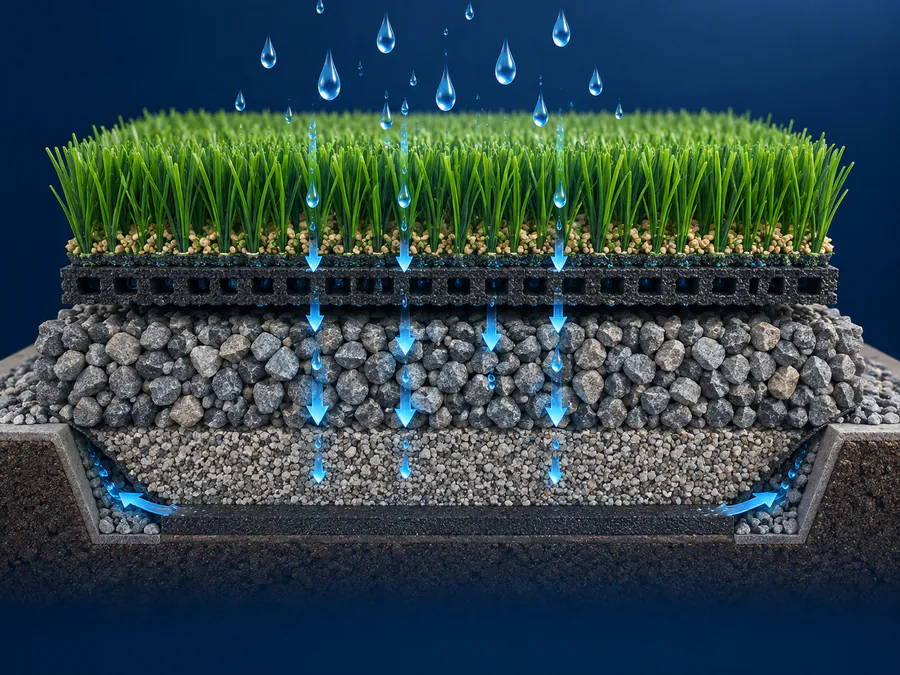
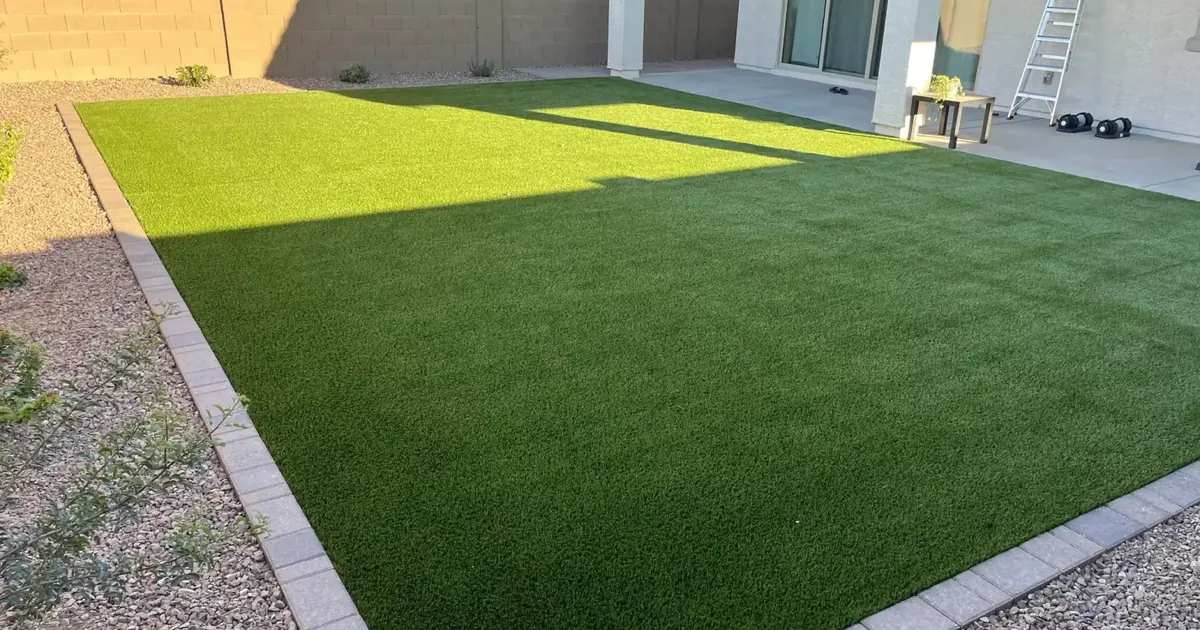
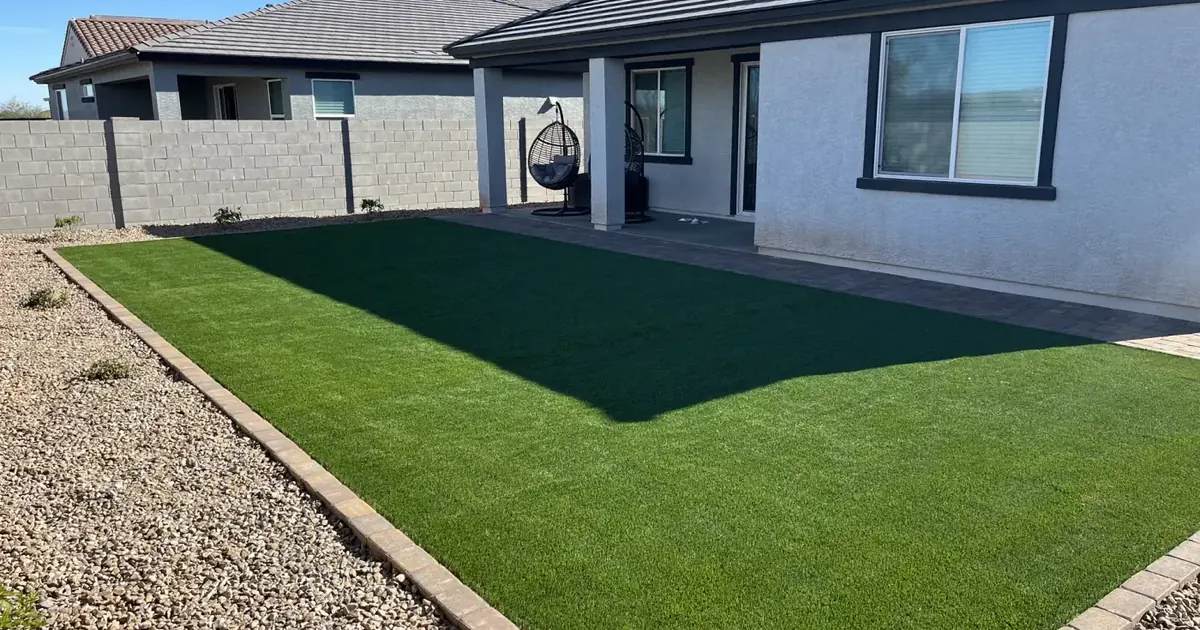
When rain falls on artificial turf, it doesn't simply run off the surface. Instead, water passes between the turf fibers and through the backing into the layers below. From there, it filters through the base and either soaks into the native soil or flows away according to the yard's grading.
Drainage speed depends on the complete installation, native soil, storm intensity, and the available outlet. A well-prepared yard may be usable soon after rain, but turf does not guarantee a dry surface immediately after every storm. Inspect for standing water, debris, and damaged edges before using the lawn again.
Choosing the Right Turf Backing
The backing is the layer that holds the turf fibers in place, and it plays a major role in drainage. Most quality turf products use either perforated backing with small holes spaced across the surface or fully permeable backing that allows water to pass through the entire material. Both designs are meant to keep water from collecting on top.
Choosing the right product depends on how your yard will be used. Areas that see heavy rain runoff or frequent pet use may benefit from turf with more open, flow-through backing. Our team helps homeowners select the right turf grade for their situation during the consultation.
Building a Permeable Base Layer
The base is the foundation of every turf installation, and it's one of the biggest factors in how well water drains. A quality base is made of compacted, permeable aggregate that supports the turf while allowing water to move through freely. Without it, water may sit beneath the surface and create soft, uneven spots.
Proper preparation starts with removing existing grass, roots, and debris, then installing and compacting the base material. Skipping steps or using the wrong materials can lead to drainage problems that show up during the first big storm. A professional residential turf install focuses on getting this foundation right from the start.
Grading the Yard to Direct Water
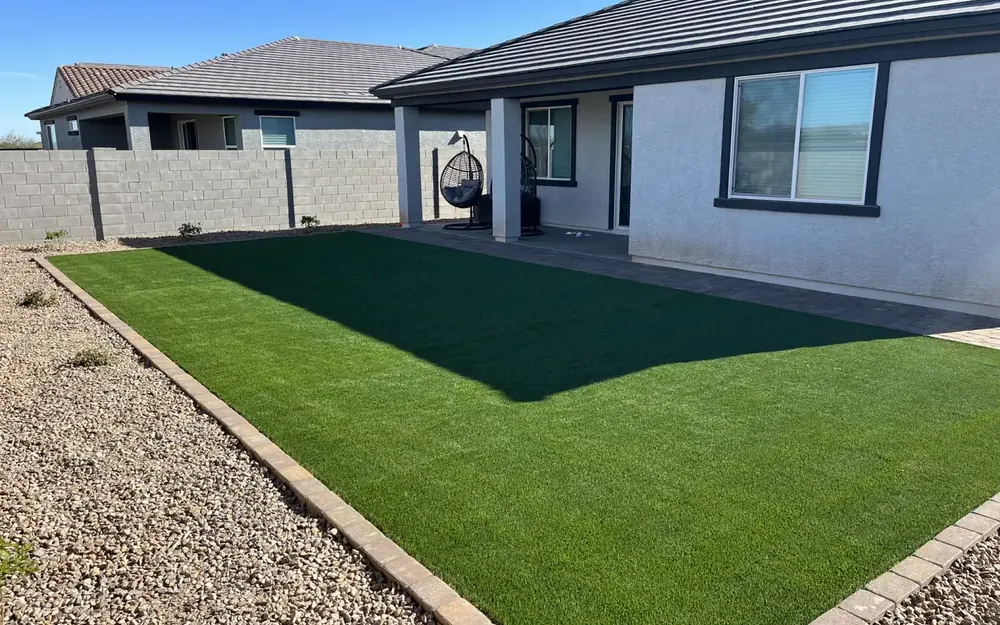
Even the best base needs proper grading to manage large amounts of rain. Grading creates a slight slope that guides excess water toward designated drainage areas and away from your home's foundation, patios, and walkways. This is especially important during intense monsoon downpours, when water can arrive faster than the ground can absorb it.
In some yards, grading works alongside drains, gravel channels, or other drainage features. A careful evaluation of your yard's layout helps determine the best approach. With thoughtful planning, a residential turf install can help protect your property from runoff while keeping the yard looking clean and even. For a closer look at preparation problems, read our guide to common turf installation mistakes.
Using Infill to Support Drainage
Infill is the granular material spread between turf fibers to help them stand upright and add weight to the turf. It also supports drainage by creating small spaces that allow water to move down through the surface. Properly distributed infill helps keep the turf stable even after heavy storms.
Choosing infill that holds up to Arizona's extreme heat and sun is important for long-term performance. Our installations use infill designed to stay in place through intense summers and monsoon season. Occasional brushing can help redistribute infill if heavy rain shifts it in certain areas.
Adding Flow-Through Drainage for Pets
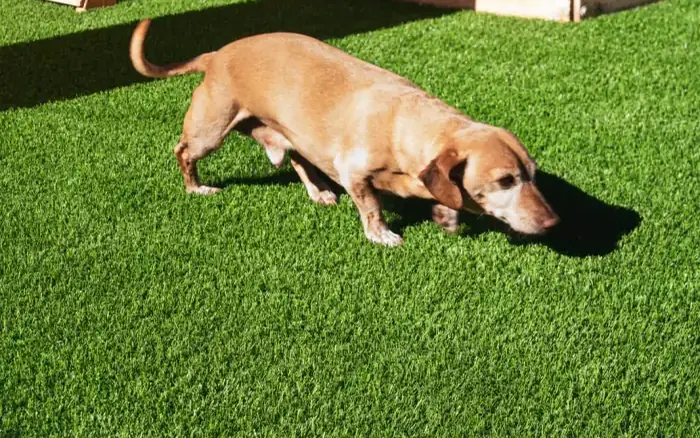
Homes with dogs need turf that can handle more than just rainwater. Pet waste and frequent rinsing add extra moisture, which makes drainage even more important for keeping the yard clean and odor-free. Standard turf may not always be ideal for these demands.
Our pet turf options include antimicrobial backing, flow-through drainage, and pet-safe infill. Product selection and a permeable base help liquids drain; regular waste removal and rinsing are still needed to manage odors.
Saving Water in the Desert
Artificial turf does not need irrigation to stay green, so replacing an irrigated lawn can reduce outdoor water use. The Arizona Department of Water Resources reports that up to 70% of residential water use can be outdoors, especially in summer. That figure covers outdoor uses broadly; it is not a turf-specific savings estimate.
Cleaning and occasional cooling can still require water. Household savings depend on the lawn being replaced, its previous watering schedule, and how the finished yard is maintained.
Preparing Your Yard With Big League Turf & Landscape
Artificial turf manages monsoon rain best when the backing, base, grading, and infill suit the site. These elements help water move through and away from the lawn. A drainage assessment should also consider intense rainfall, runoff entering from other areas, and soil that absorbs water slowly.
Big League Turf & Landscape is licensed and insured under ROC #364029 and offers free estimates with clear, honest pricing. Contact Big League Turf & Landscape today at (602) 980-6379 to schedule your residential turf install.
Plan your yard with Big League Turf & Landscape. Request a free estimate and discuss the right turf, base, and drainage approach for your property.
Request a Free EstimateMORE ON TURF
Frequently Asked Questions
READY FOR A YARD THAT WORKS?
Big League Turf has finished 1,500+ Arizona projects in 7 years. Get a free, honest quote for your yard.
Get a Free EstimateOr call us at (602) 980-6379.