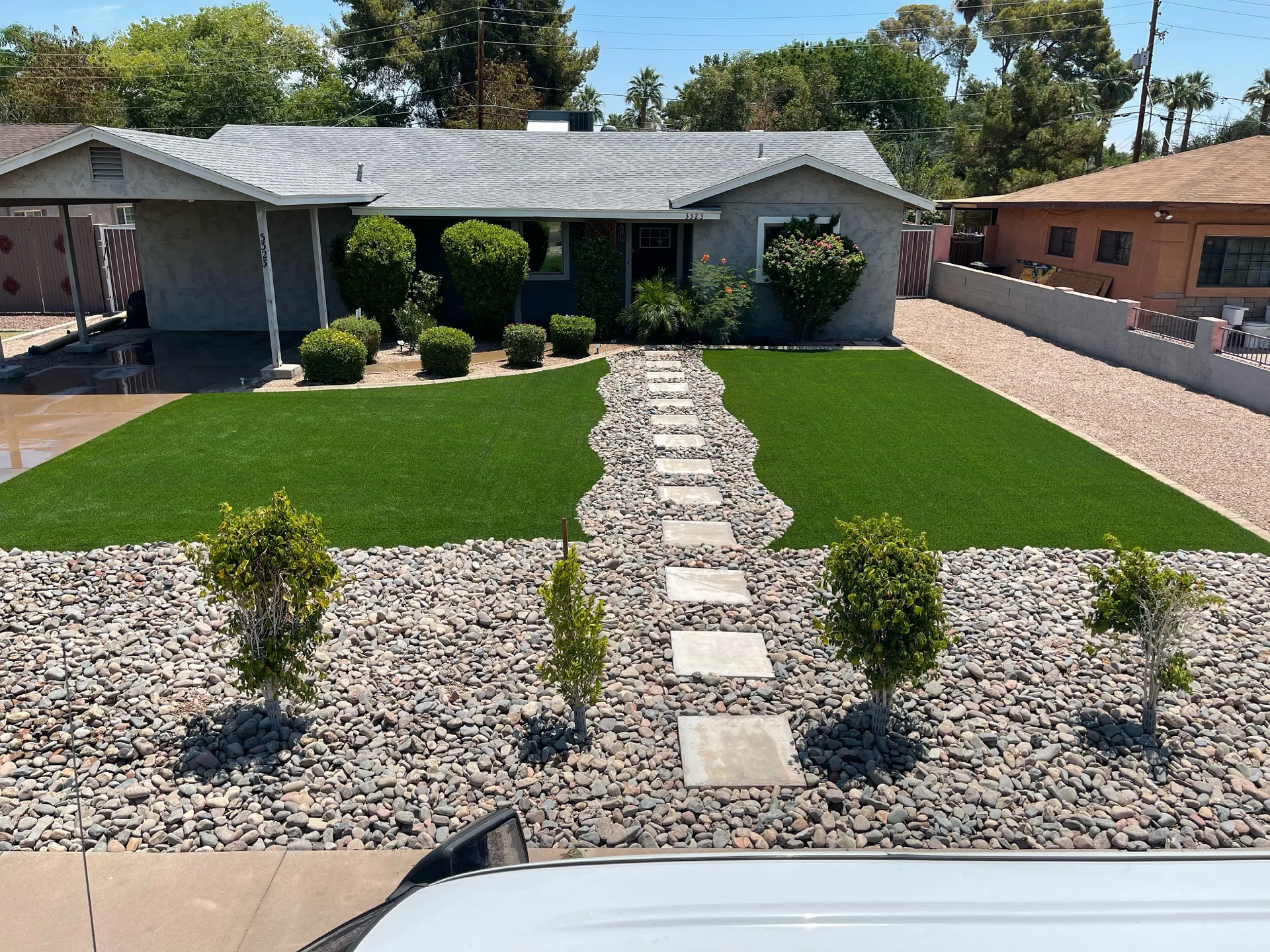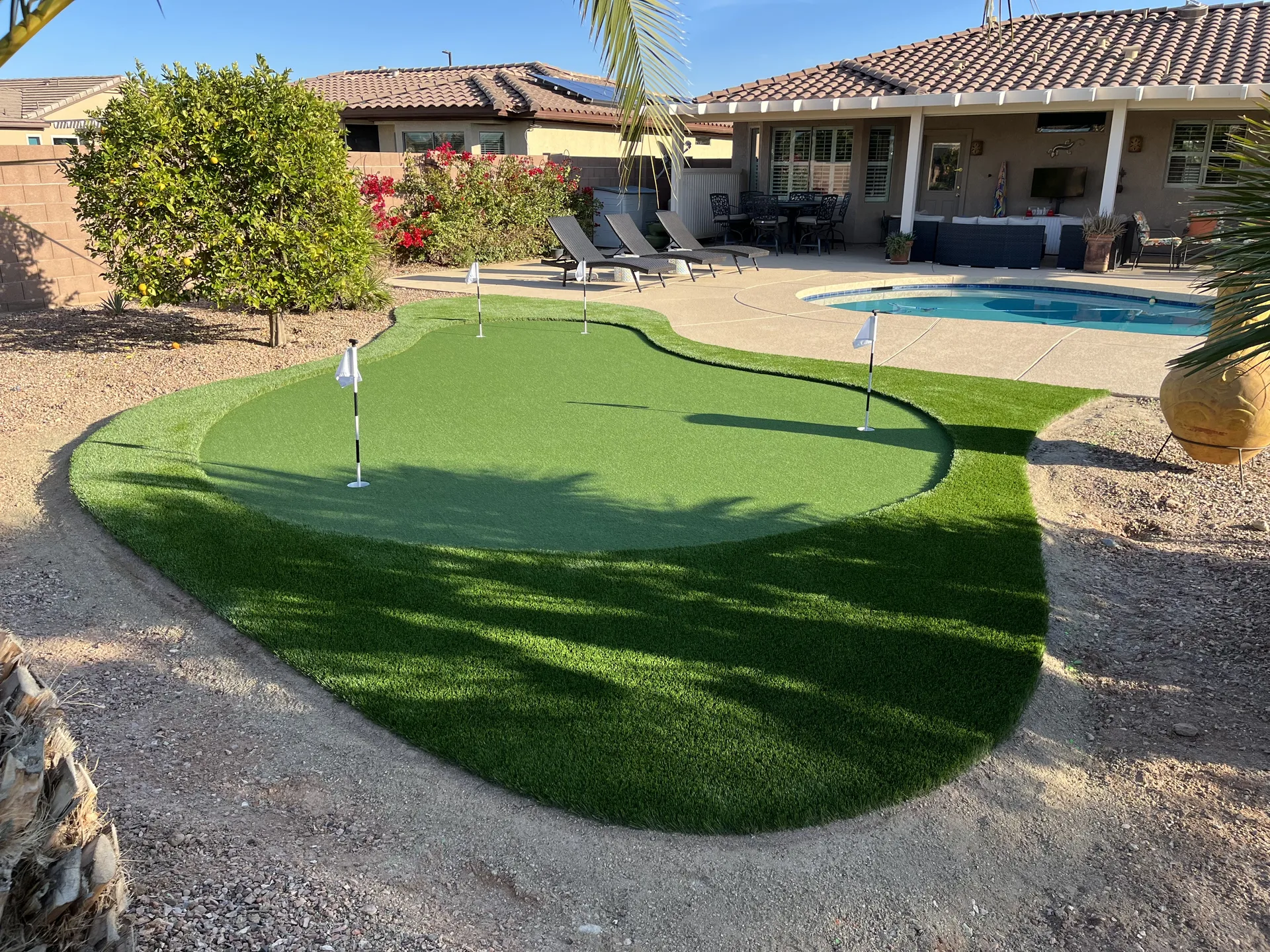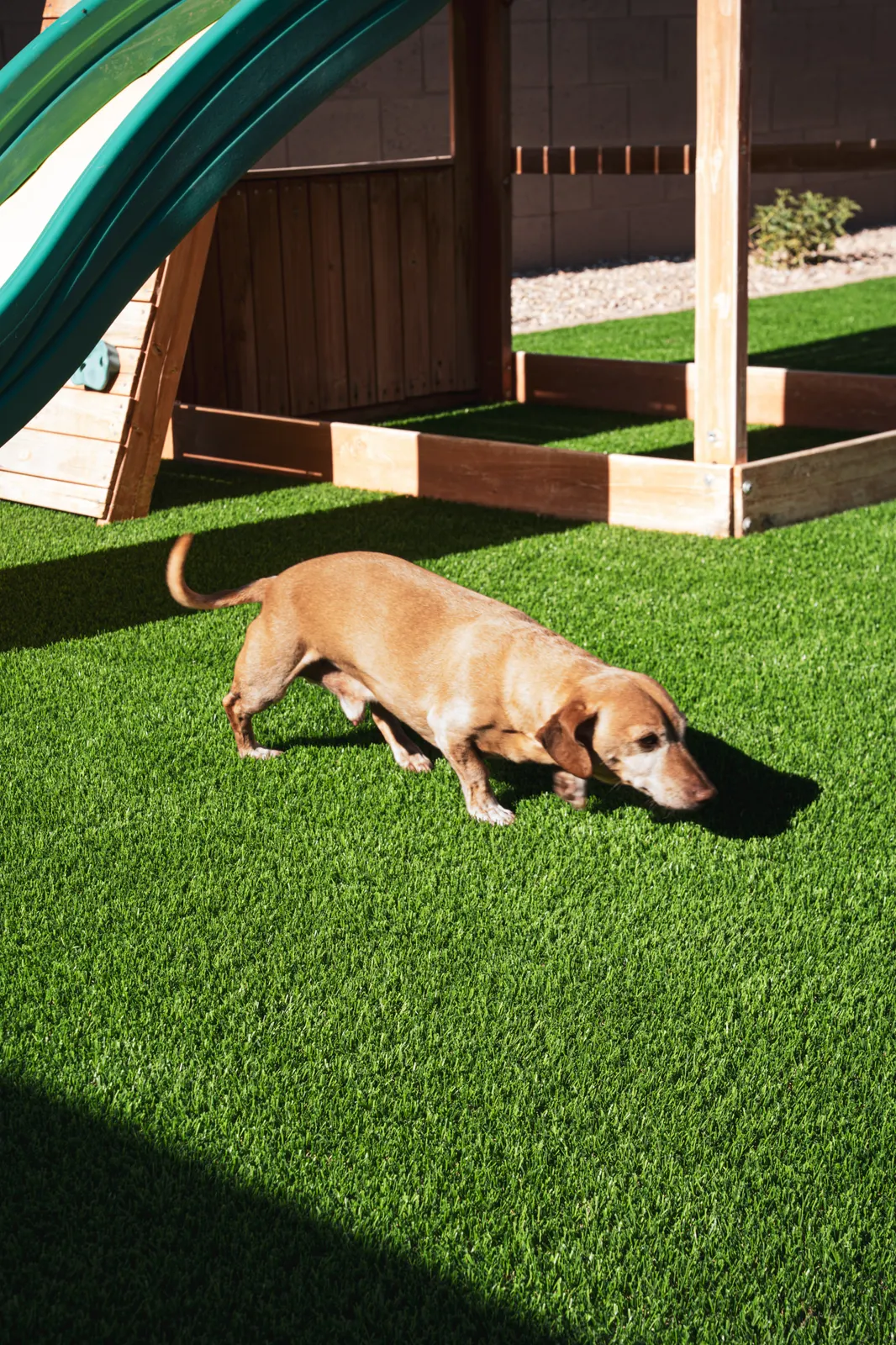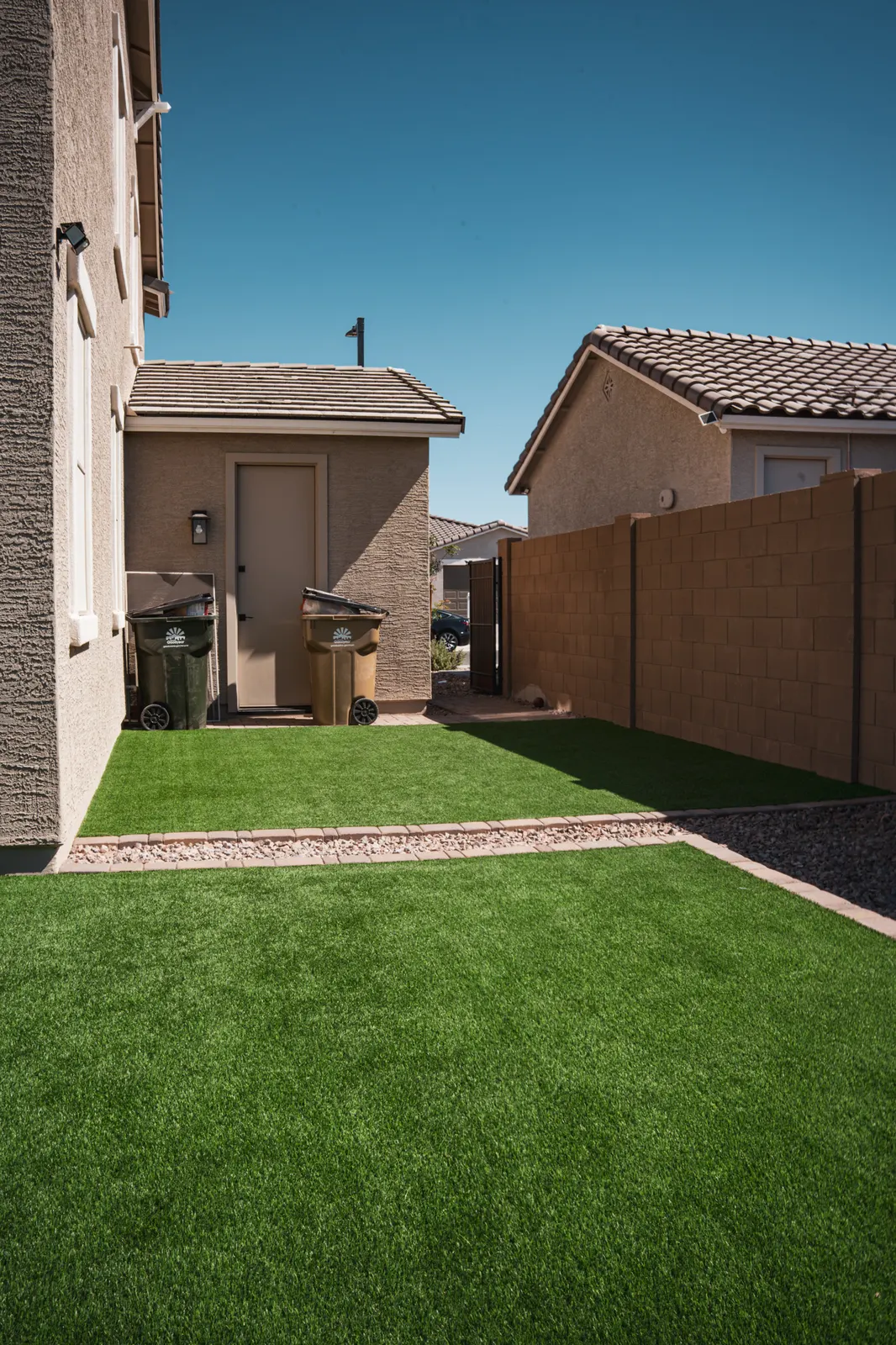
Turf Quality and UV Protection
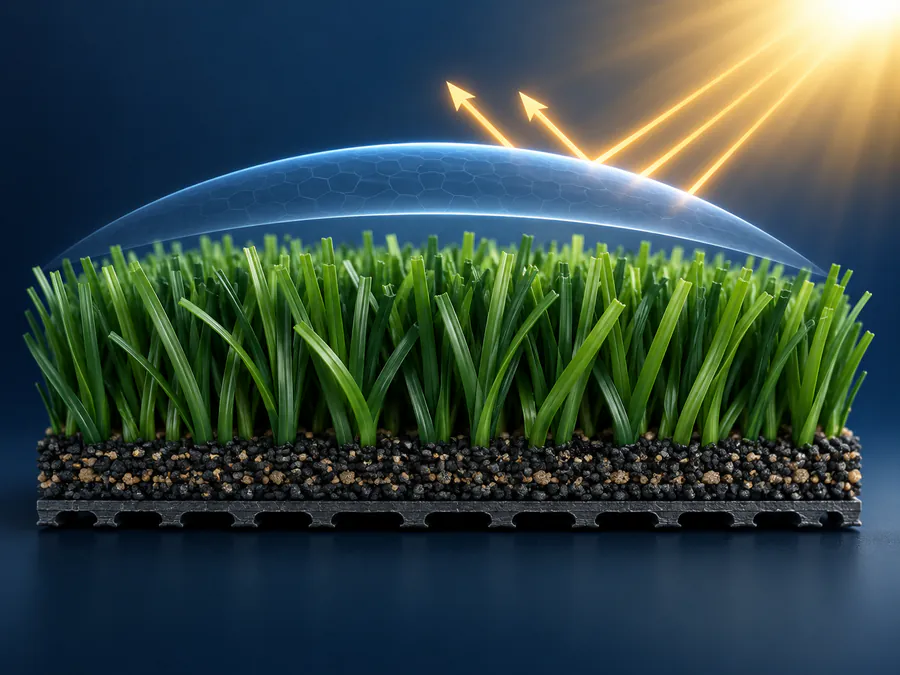
Dense fibers, a strong backing, and UV-stabilized materials resist fading, splitting, and matting. That protection matters under Phoenix's intense sunlight and long summers.
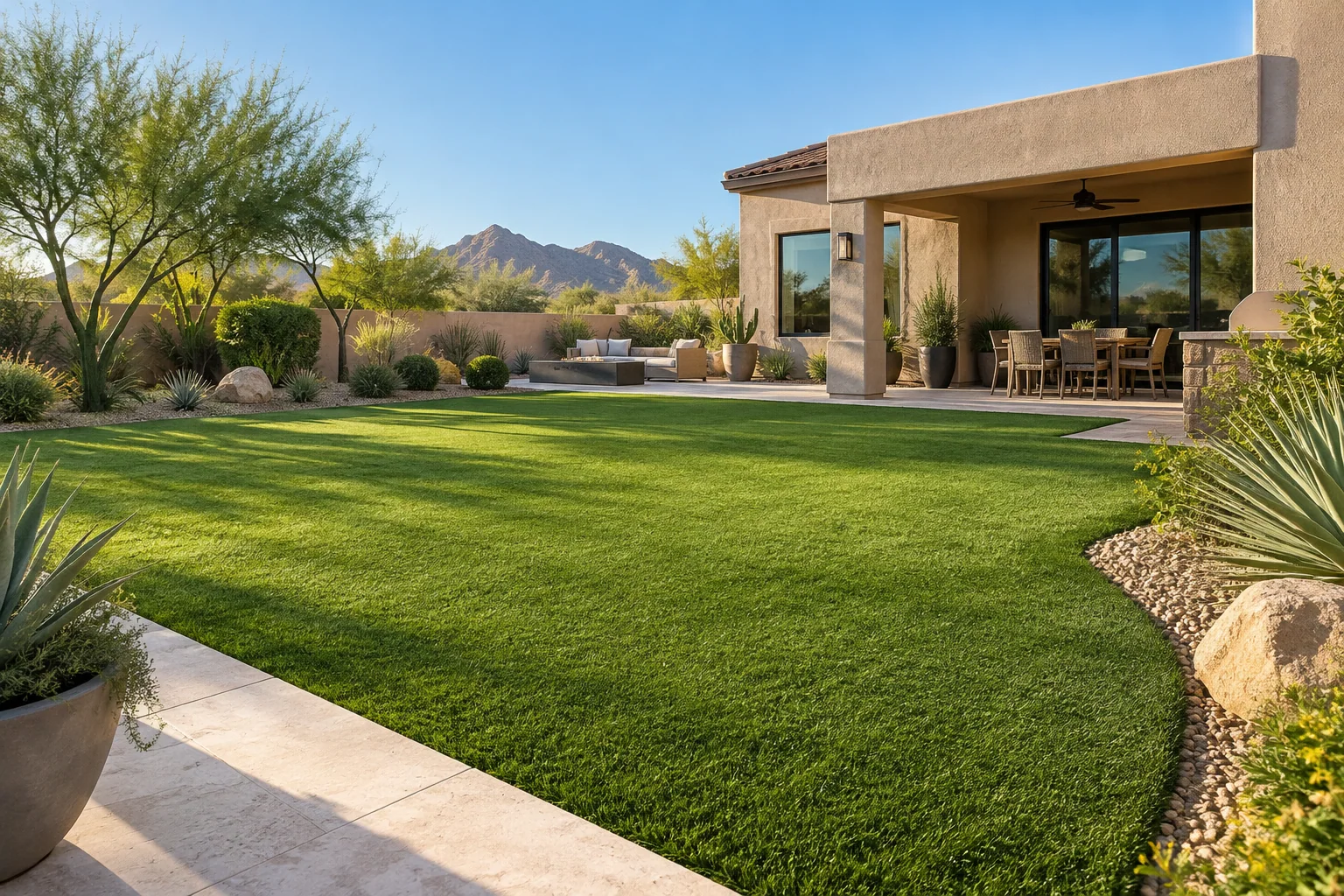
A quality artificial turf lawn typically lasts 15 to 20 years when it is installed correctly and cared for. Some low-traffic yards last even longer, while busy dog runs, play areas, and commercial spaces may wear sooner.
In Arizona, the turf itself is only part of the equation. Strong UV protection, a compacted base, good drainage, the right infill, and simple routine care all affect how many useful years you get. Here is what homeowners should expect and how to protect the investment.
For a professionally installed residential lawn, 15 to 20 years is a realistic planning range. That does not mean the turf suddenly fails on its twentieth birthday. It means the fibers, color, seams, and backing should stay useful and attractive through years of normal home use.
Traffic changes the answer. A decorative front yard receives less wear than a backyard used every day by children and large dogs. Commercial walkways and shared play areas also compress the fibers faster than a lightly used home lawn.
| Type of area | Typical planning range | What affects it most |
|---|---|---|
| Light-use residential lawn | 15–20+ years | Sun exposure and material quality |
| Family or pet backyard | 12–18 years | Daily traffic, cleaning, and infill |
| Commercial or shared space | 8–15 years | Foot traffic and maintenance frequency |
| Backyard putting green | 10–15 years | Play volume, brushing, and surface care |
These are general planning ranges, not guarantees. Product quality, installation, climate, and use can move the real lifespan in either direction.
Big League Turf installs turf with a 16-year material warranty and backs the installation with a 2-year labor warranty. A warranty is not the same as an exact replacement date, but it is a useful signal that the product was built for long-term outdoor use.
Two lawns installed on the same day can age very differently. The biggest factors are the quality of the turf, the work underneath it, and how the space is used after installation.
Dense fibers, a strong backing, and UV-stabilized materials resist fading, splitting, and matting. That protection matters under Phoenix's intense sunlight and long summers.
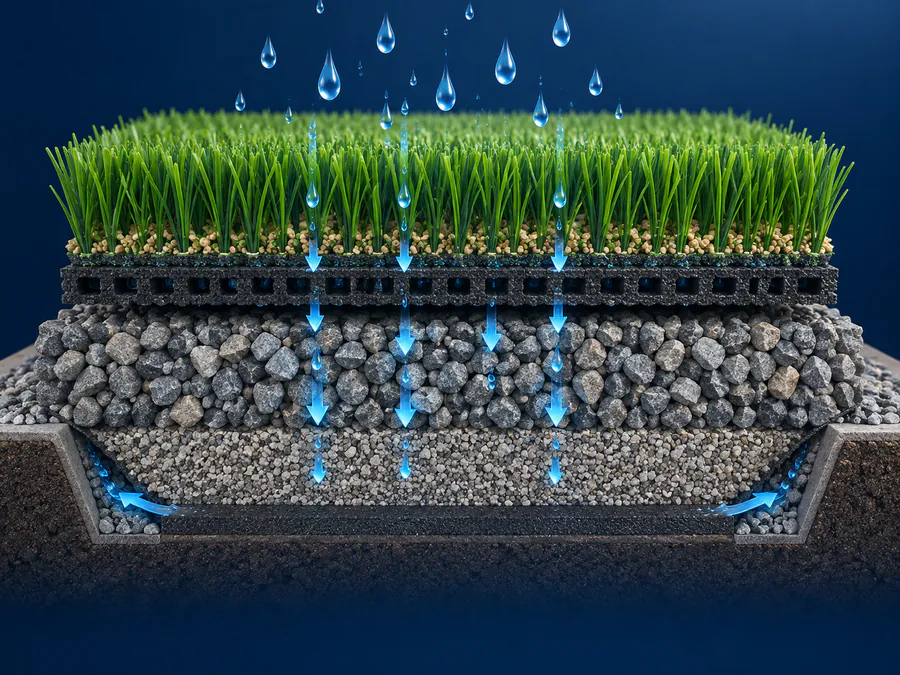
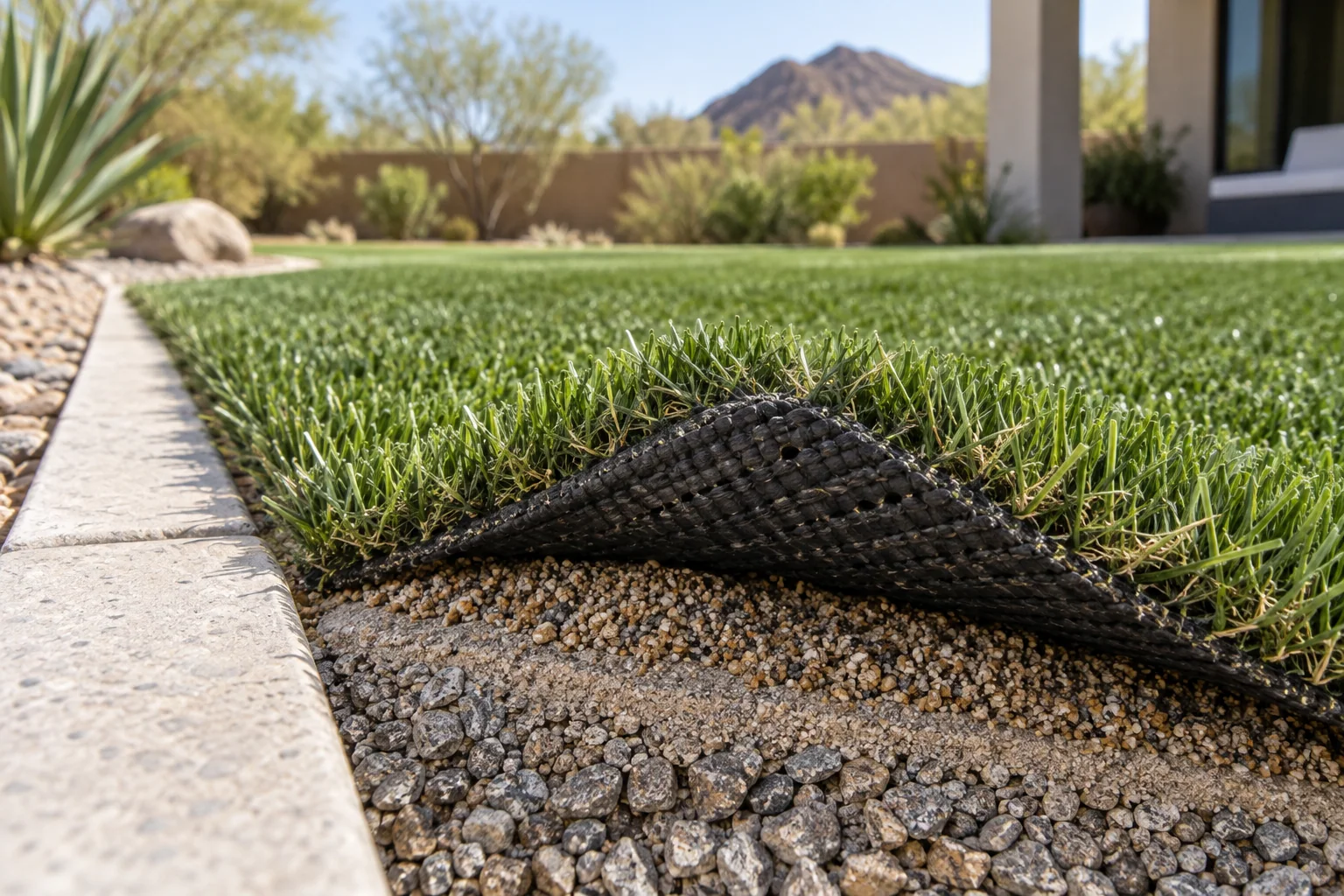
A firm, properly graded base keeps the lawn flat and lets water move away. Weak preparation can settle, hold water, and allow seams to shift.
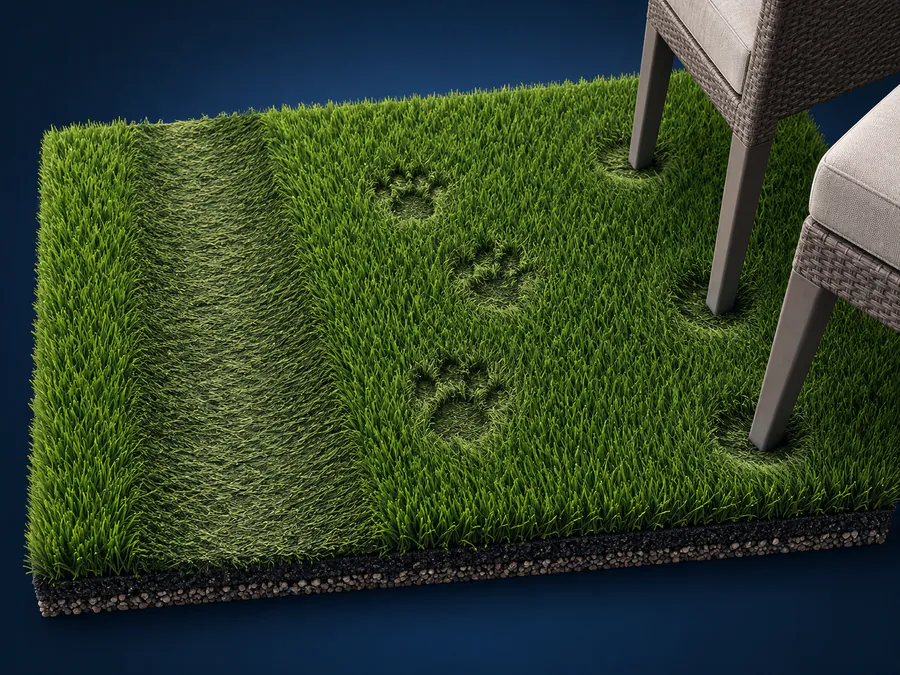
Repeated footpaths, energetic dogs, play equipment, and heavy furniture press on the same fibers. Rotating furniture and brushing busy lanes helps the blades recover.
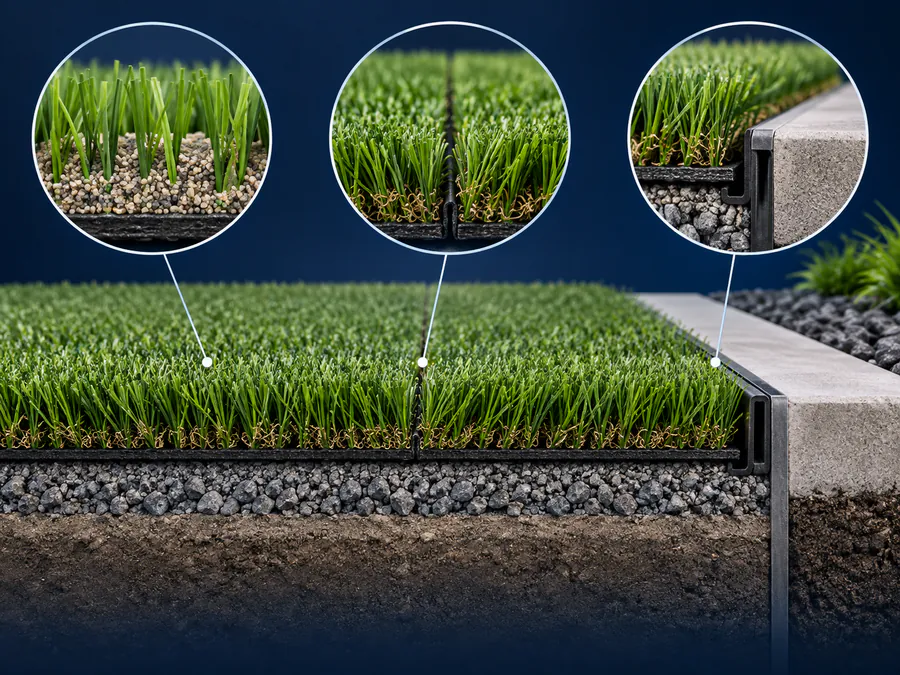
Infill supports the blades and helps the surface wear evenly. Secure edges and well-made seams prevent lifting and separation as the installation ages.
These parts work as one system. See how they come together on our residential turf page.
Arizona heat is demanding, but high-quality turf is designed to live outdoors in direct sun. Heat alone should not ruin a properly chosen product. The greater long-term concern is ultraviolet exposure, which can fade or weaken low-grade fibers that lack good UV stabilization.
The installation matters here too. A stable aggregate base handles temperature swings better than rushed or uneven prep. Good drainage also protects the base when monsoon rain arrives after months of dry weather.
Choose turf made for hot, sunny climates rather than selecting only by color or softness. Lighter blade tones, quality infill, and shade can make the yard more comfortable in summer, while UV-stable fibers help preserve its appearance over the years.
Not sure which turf can handle your yard, pets, and sun exposure? We will bring samples and help you compare the right options on site.
Get My Free Estimate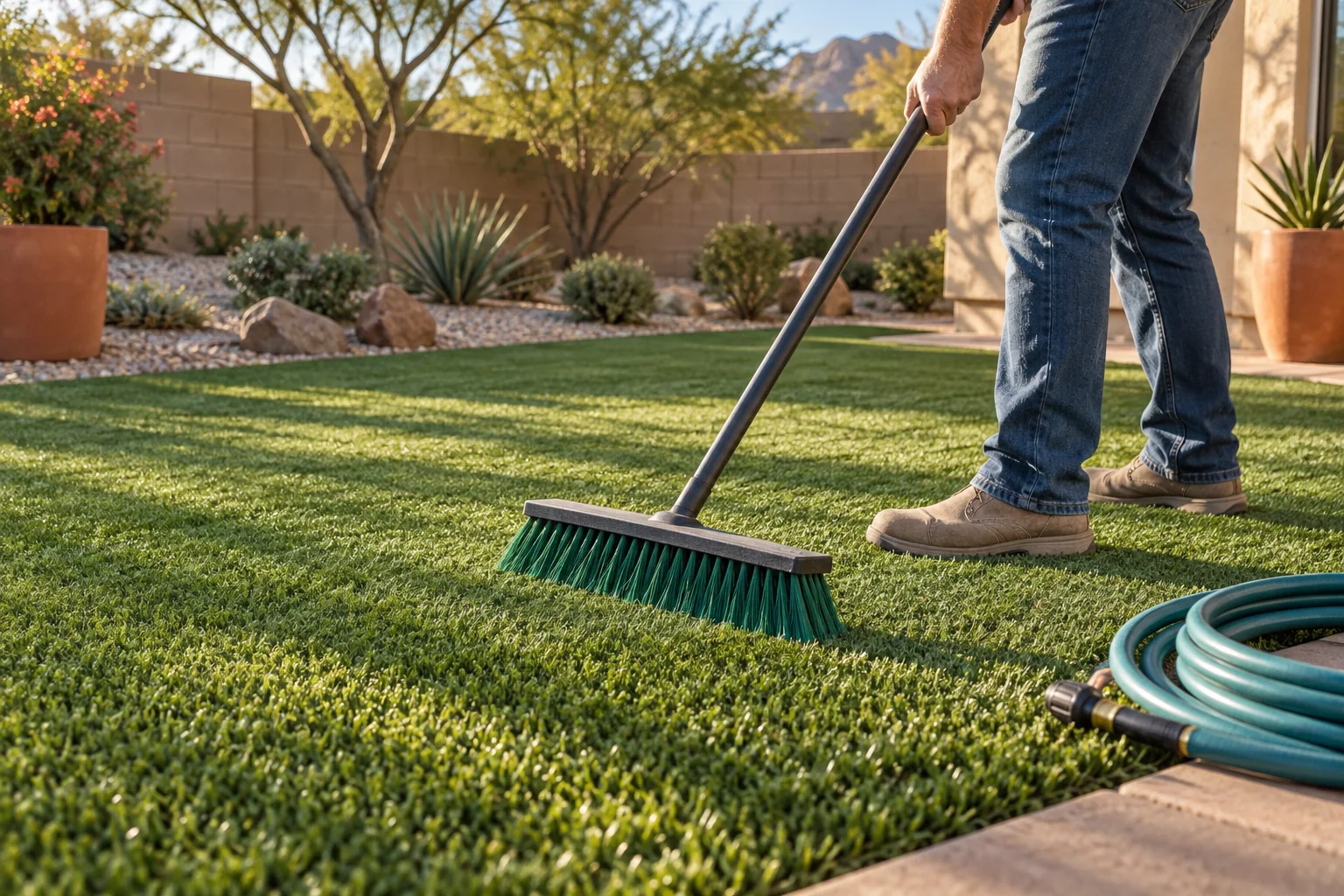
Artificial turf does not need mowing, watering, or fertilizer, but low maintenance is not the same as no maintenance. A short routine keeps debris from building up and helps the surface wear evenly.
Avoid metal rakes, wire brushes, harsh solvents, and pressure washing at close range. Those tools can damage fibers or pull infill out of place. For a simple seasonal checklist, visit our turf care guide.
Turf usually shows gradual wear rather than failing all at once. A repair may be enough when damage is limited to one seam or edge. Broad changes across the whole lawn are a stronger sign that replacement is approaching.
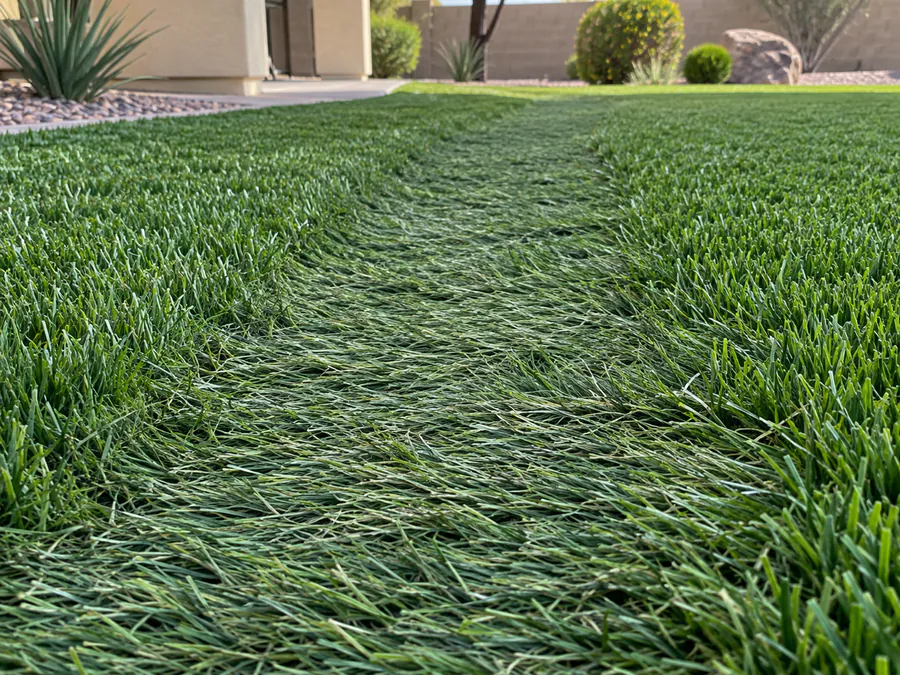
The blades remain matted after brushing and no longer spring back, leaving visible traffic lanes across the lawn.
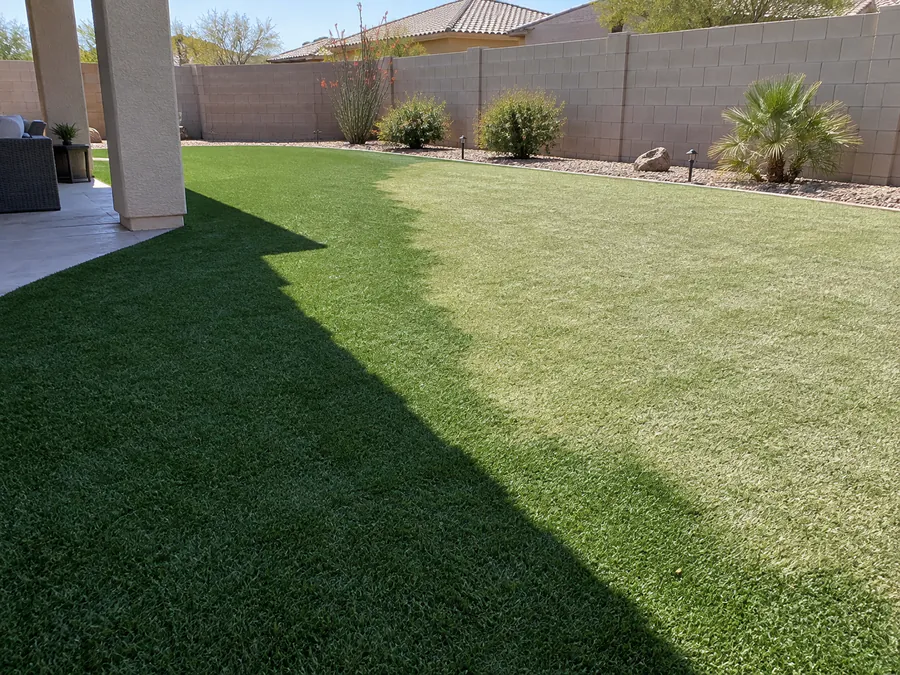
Large sun-exposed areas look pale or washed out compared with turf that spends more time in shade.
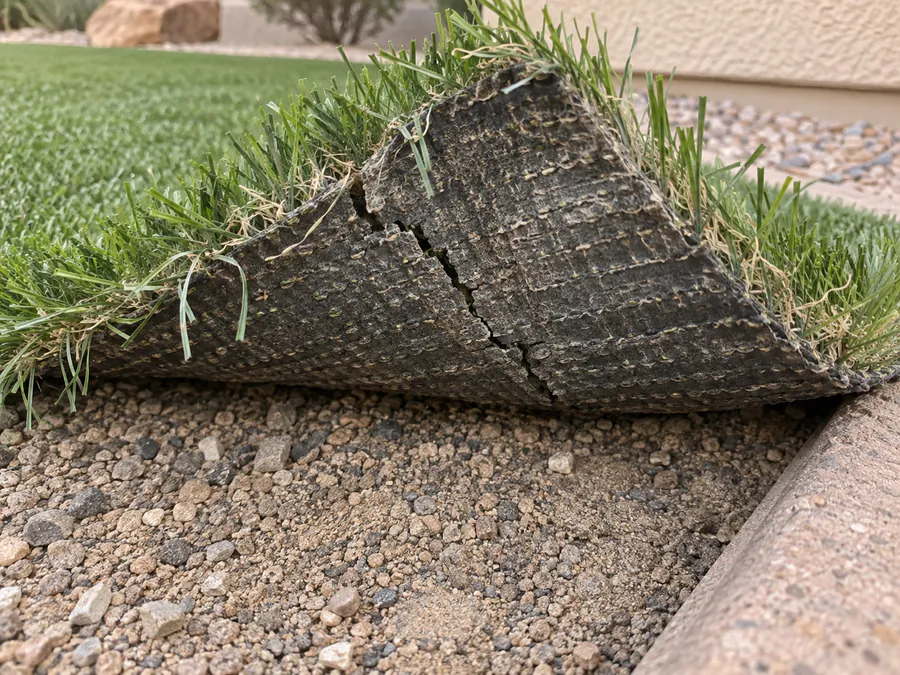
The backing cracks, stiffens, or begins separating from the fibers when an edge or damaged area is lifted.
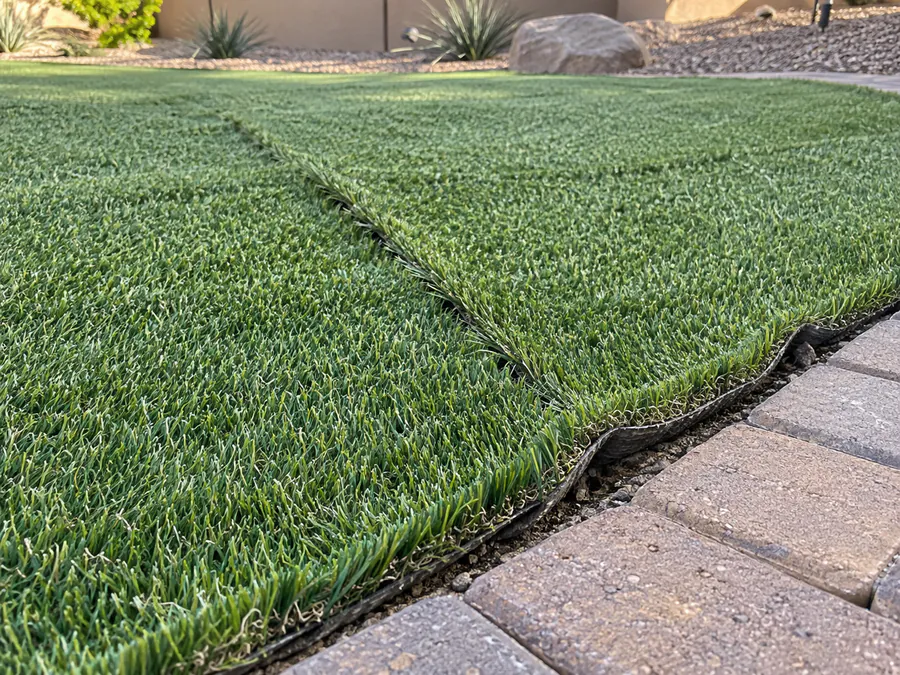
Multiple seams form raised ridges or perimeter edges curl away from pavers instead of staying tight and level.
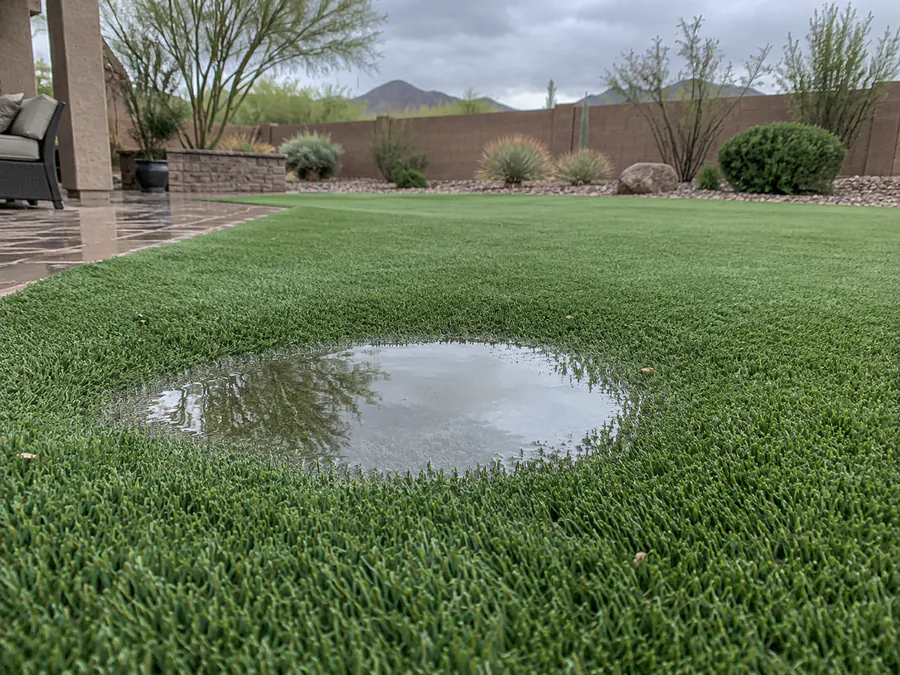
Water begins collecting in low spots because the base has settled or compacted unevenly beneath the turf.
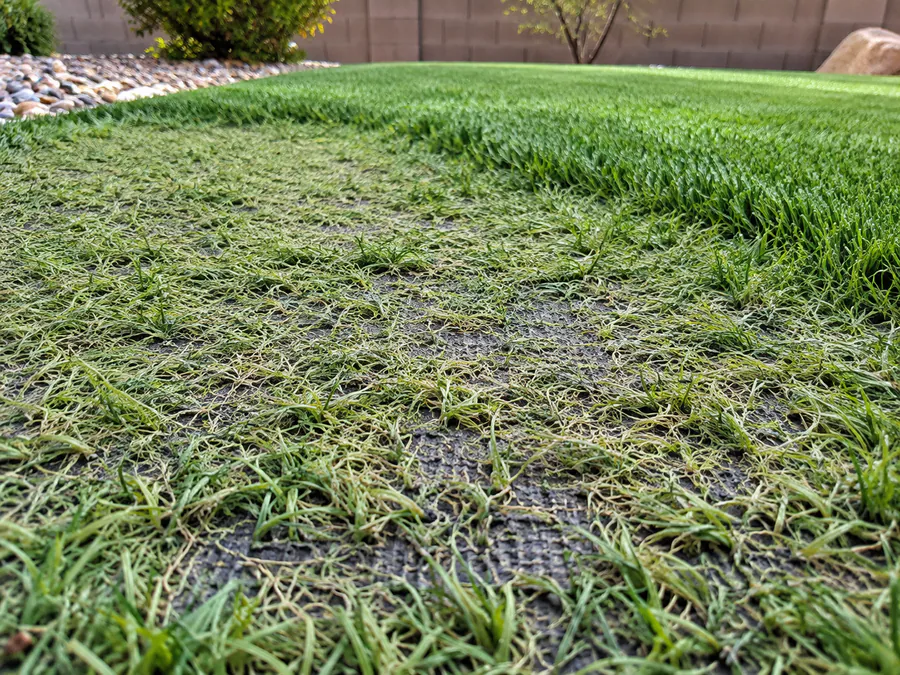
Broad high-use areas lose enough fibers that the dark backing becomes visible through the surface.
Age by itself is not a reason to tear out a lawn that still looks good and drains correctly. Judge the surface by its condition, safety, and performance. A professional inspection can also tell you whether the problem is in the turf, the infill, or the base underneath.
Often, yes. A lifted edge, a short split seam, displaced infill, or one damaged patch may be repairable. Acting early keeps water and debris from reaching the base and turning a small issue into a larger one.
Replacement makes more sense when the fibers are worn across most of the yard, the backing has become brittle, or the base has widespread drainage and settling problems. At that point, repeated repairs can cost more without restoring a consistent look.
If replacement is needed, the existing area is not always a complete restart. A contractor can inspect the base and edging to see what remains usable, then correct drainage or grading before installing the new surface.
The best way to get 15 to 20 years from artificial turf is to choose the whole system carefully. Durable fibers matter, but so do excavation depth, compaction, drainage, seams, edges, and the infill matched to your yard.
Big League Turf & Landscape builds turf for Arizona conditions and backs every installation with clear warranty coverage. We will look at your sun exposure, traffic, pets, and drainage before recommending a product, so you are not paying for the wrong lawn.
Ready for a turf lawn built to stay green for years? Schedule a free site visit and get a clear recommendation for your space.
Plan My Turf ProjectBig League Turf has finished 1,500+ Arizona projects in 7 years. Get a free, honest quote for your yard.
Get a Free EstimateOr call us at (602) 980-6379.