
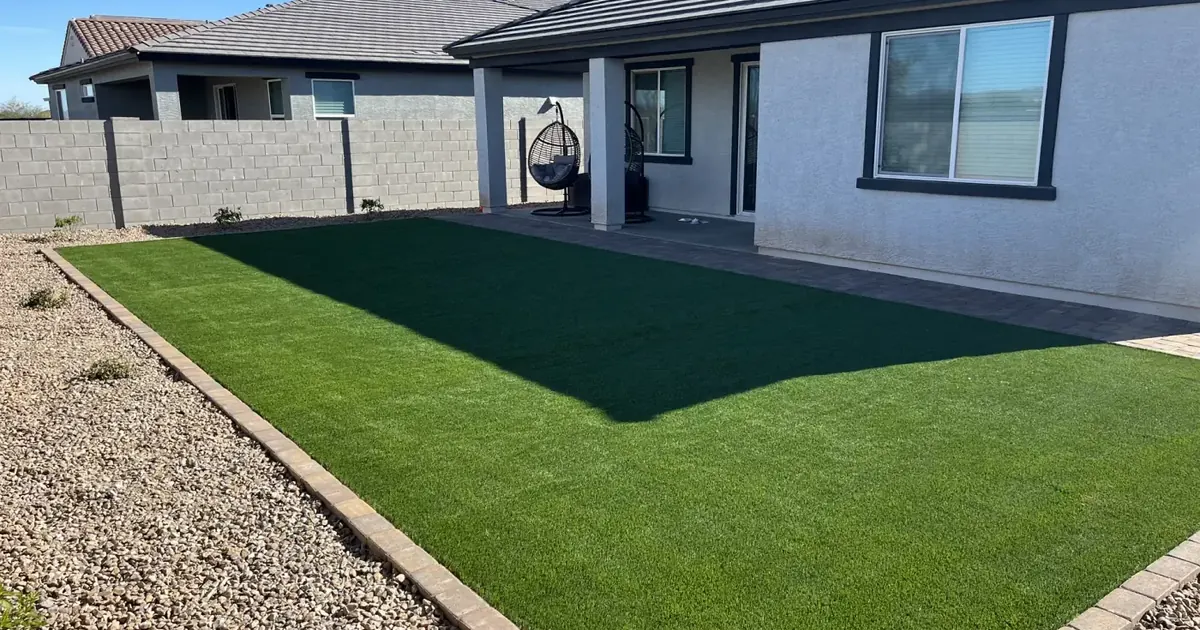
Artificial turf has become one of the most popular landscaping choices in Arizona. It stays green year-round, never needs mowing, and saves homeowners from fighting a losing battle with dry soil and thirsty grass. Still, many homeowners have one big question before committing: does artificial turf get too hot?
It is a fair concern in a place where summer temperatures regularly climb past 100 degrees and the sun beats down for most of the day. The honest answer is that turf does heat up in direct sun. But with the right product, smart design, and a few simple habits, it can remain comfortable and usable for much of the year. Here is what affects turf temperature and how a well-planned installation can help you enjoy your yard in the desert.
Highlights
- Artificial turf gets hotter than natural grass in direct sunlight, especially during Arizona summers.
- Sunlight intensity has a major effect on surface temperature, making shade one of the most effective cooling tools.
- Heat-rated, UV-stable turf products are designed to handle intense desert conditions, but can still become hot underfoot.
- A rinse with water can lower surface temperature, although the cooling effect varies and the turf can heat up again.
- Shade, cooler play times, and checking the surface help protect bare feet and paws.
- Big League Turf and Landscape designs West Valley yards with Arizona's heat in mind.
Understand Why Artificial Turf Heats Up
Natural grass stays relatively cool because it contains water and releases moisture through its blades. Synthetic turf does not have that natural cooling process, so it absorbs and holds more heat when exposed to sunlight.
Research from Penn State's Center for Sports Surface Research found hotter surfaces on synthetic turf than on natural grass in direct sunlight. Weather and the particular turf system affect the result, so a single temperature reading does not describe every lawn.
That matters for Arizona homeowners. Strategies that reduce direct sun exposure can make a meaningful difference. Turf in shaded areas, or during cooler parts of the day, behaves very differently from turf baking in the afternoon sun.
Identify What Makes Turf Hotter
Several factors influence how warm turf feels underfoot. Understanding them helps you make better choices during planning.
Sun Exposure and Reflected Heat
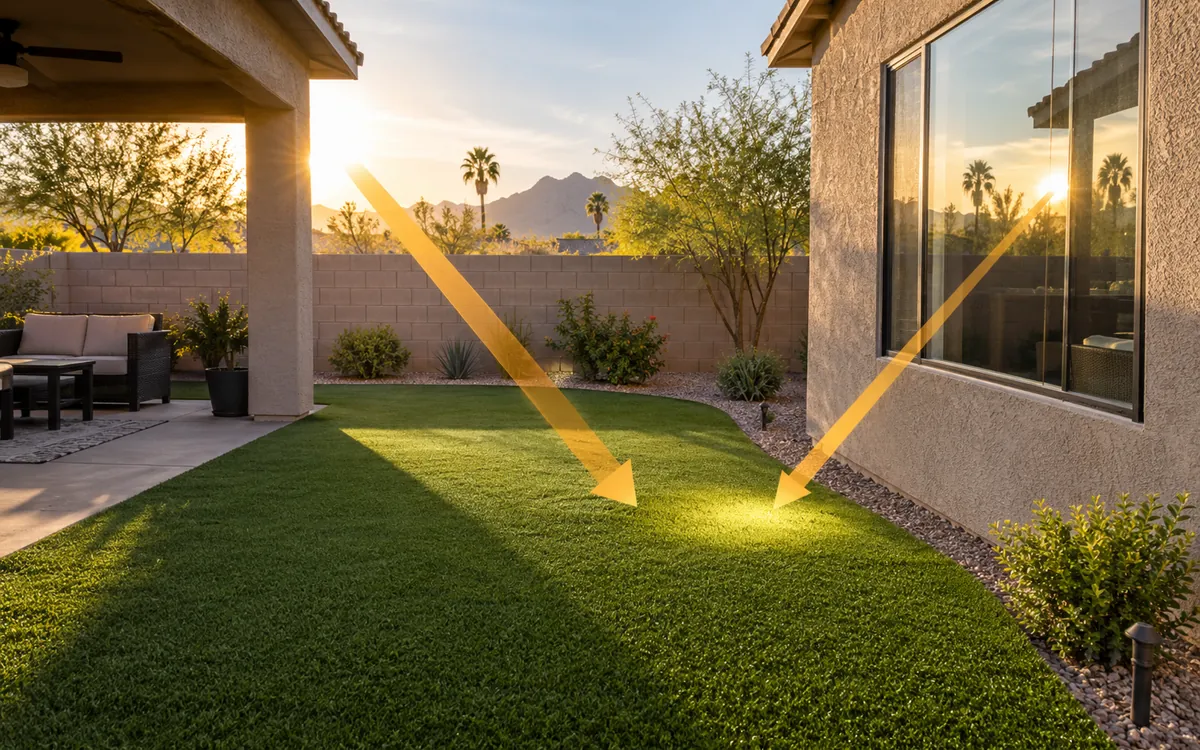
Yards with western exposure take the brunt of afternoon heat, while areas shaded by the home, trees, or patio covers receive less direct sun. Reflected sunlight matters too. Large windows and reflective surfaces can direct extra sunlight onto nearby turf. Low-E windows can concentrate that reflection, creating hot spots that may damage fibers.
Turf, Infill, and Surrounding Materials
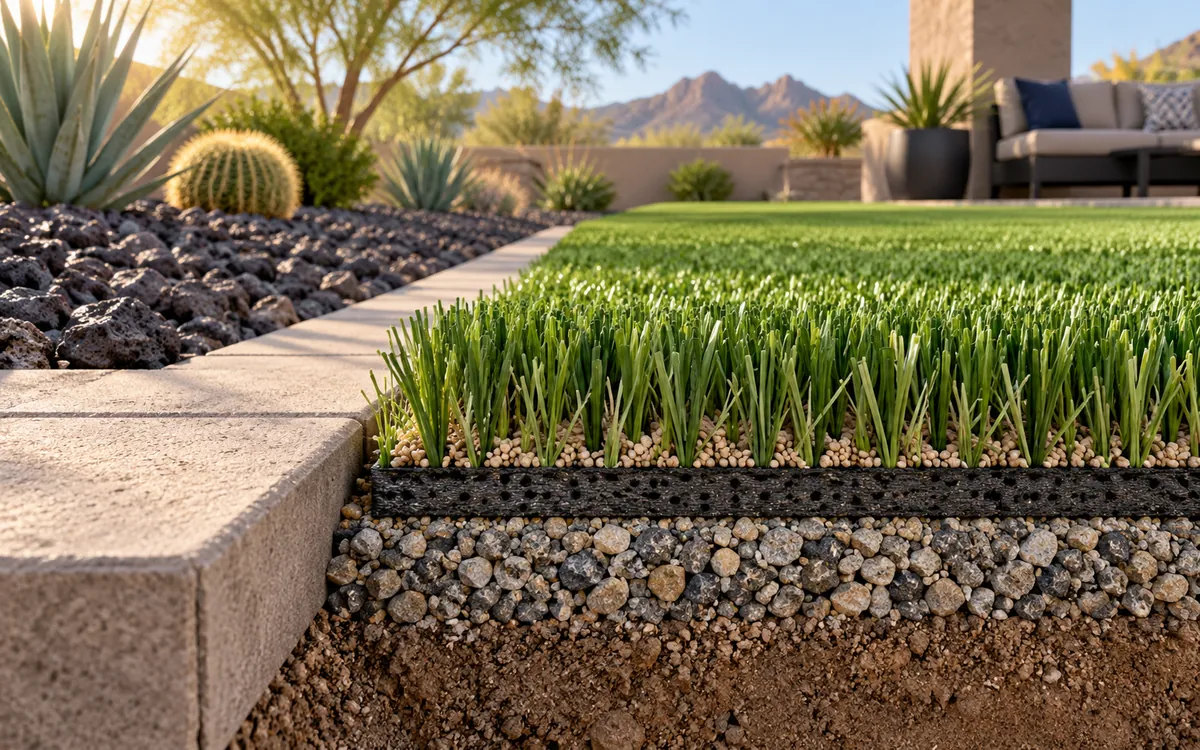
Fiber shape, density, color, and backing all influence how the surface absorbs and retains heat. Infill type and depth also play a role. Dark rock, concrete, and pavers beside the lawn can add to the heat of the space, so planning the entire yard together helps create a more comfortable result.
Plan Shade Into the Design
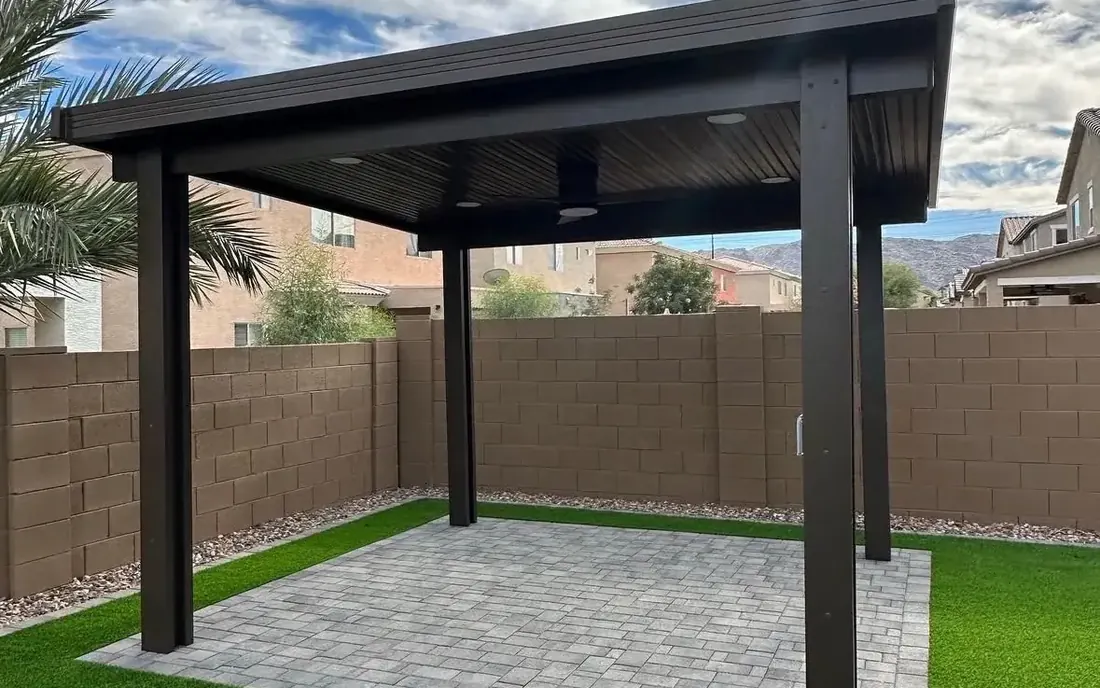
Since sunlight has such a strong effect on surface temperature, adding shade is one of the most effective ways to keep turf comfortable. It also makes the entire backyard more usable during Arizona's long warm season.
Patio covers create protected areas that receive less direct sun. Shade trees, pergolas, and shade sails can also help cover play spaces and dog runs. Thoughtful placement matters: check where shadows fall during the hottest hours, and remember that an open-lattice pergola provides different coverage from a solid roof.
Our team designs outdoor spaces as a whole. Pairing a turf installation with a patio cover or another shade feature helps create a backyard you can enjoy more often.
Choose Heat-Rated, UV-Stable Turf
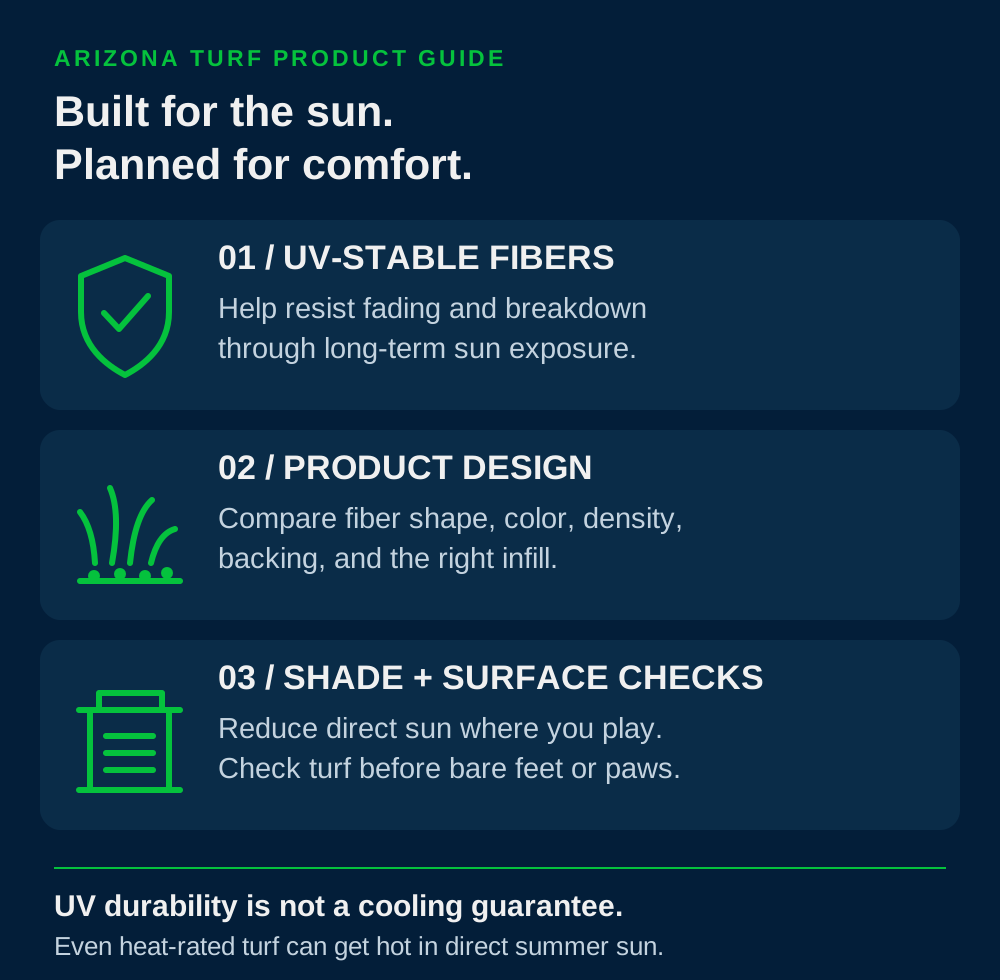
Not all artificial turf is built for the desert. Products designed for Arizona conditions hold up better against intense sunlight and high temperatures, and some are engineered to reduce heat absorption compared with standard options.
UV-stable materials help resist fading and breakdown, keeping the yard looking green through years of sun exposure. UV protection helps the product last; it does not guarantee that the surface will stay comfortable for bare feet or paws in direct summer sun.
During your consultation, we will walk you through turf and infill options and explain how they suit your yard's sun exposure and daily use. Learn more about our residential turf installations and how long artificial turf lasts.
Cool the Surface With Water
A rinse is one of the simplest ways to lower turf temperature before kids or pets head outside. Water absorbs heat and cools the surface through evaporation, offering temporary relief on hot afternoons.
In one Penn State test, irrigated turf remained an average of about 14 degrees Celsius, or 25 degrees Fahrenheit, cooler than unirrigated plots after 195 minutes. That experiment was conducted in Pennsylvania under specific weather and watering conditions. It is not a promise that a quick rinse in an Arizona yard will provide the same cooling or duration.
A later Penn State irrigation report also notes that turf can warm back up quickly. Recheck the surface after watering and during use. If it is still hot, move play to a cooler shaded area or wait until temperatures drop.
Some homeowners integrate irrigation or misting near turf areas to make cooling convenient. Proper drainage helps water move through the installation instead of pooling. Our team can help you plan cooling access alongside the base, grading, and drainage; water use will depend on the weather and how often the yard needs cooling.
Protect Kids and Pets on Hot Days
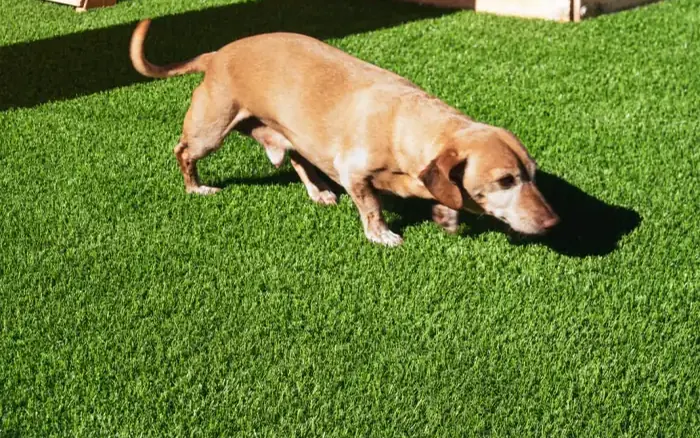
Paws and bare feet are more exposed to surface heat than shoes, so check the turf before playtime. If it feels uncomfortably hot to your hand, keep bare feet and paws off it. A hand check is a quick warning, not a guarantee that the whole lawn is comfortable: sunny patches can be much hotter than shaded ones.
- Schedule summer play for early mornings and evenings when the surface is cooler.
- Provide shade over the spaces children and dogs actually use.
- Cool hot turf with water, then check it again before use and as it dries.
- Keep fresh drinking water available and take breaks indoors during extreme heat.
- Move to a cooler area whenever the turf feels hot or a child or pet seems uncomfortable.
Pet turf is designed with drainage and durability in mind. Pair it with shade, water access, and a sensible summer routine to make the space more usable. See our pet turf options and guide to artificial turf for dogs.
Enjoy a Cooler Backyard With Big League Turf and Landscape
Artificial turf does heat up under the Arizona sun, but it can still work beautifully for your home. Shade, suitable materials, temporary cooling with water, and thoughtful design help you get more use from a low-maintenance, always-green yard.
At Big League Turf and Landscape, we design outdoor spaces for the West Valley climate, combining premium turf with patio covers, irrigation, pavers, and more. Our team helps you choose products and a layout that suit your home and how you spend time outside. Fall is a great time to plan your project.
Ready to plan a turf installation with Arizona's heat in mind? We will walk your yard, discuss shade and cooling options, and help you choose the right materials.
Schedule My Free Design ConsultationMORE ON TURF
Arizona Turf Heat Questions
READY FOR A YARD THAT WORKS?
Big League Turf has finished 1,500+ Arizona projects in 7 years. Get a free, honest quote for your yard.
Get a Free EstimateOr call us at (602) 980-6379.